Lipid-Based Oral Care: Gum Treatment Delivery
Disclosure: I am an independent affiliate for Dental Pro 7. This means I may earn a small commission if you purchase through my links, at no extra cost to you. My review is based on thorough research and an honest analysis of the product's claims and user feedback.
Understanding lipid-based delivery systems in oral care. We explain how lipid carriers enhance ingredient penetration and why this technology improves gum disease treatment outcomes.
After analyzing the pharmaceutical research on lipid-based drug delivery systems, my review of the evidence reveals that lipid-based oral care represents a meaningful leap beyond traditional water-based products. The science behind oil-soluble carriers and their ability to penetrate gum tissue and bacterial biofilms is well-established in pharmacology.
Dental Pro 7 is a cosmetic oral-care product. It is not a drug and is not intended to diagnose, treat, cure, or prevent any disease. Statements on this page have not been evaluated by the FDA or MHRA. Always consult a qualified dental professional for oral health concerns.
Understanding the Biological Barriers
The Mucosal Barrier
The oral cavity is lined with mucous membranes that serve as protective barriers. These membranes are designed to prevent penetration of foreign substances—which is good for protection but bad when trying to deliver therapeutic ingredients to infected tissue.
The mucosal barrier is lipid-rich, meaning it’s more permeable to oil-soluble compounds than water-soluble ones. Water-based products simply can’t cross this barrier effectively, limiting their action to surfaces.
Bacterial Biofilms
Gum disease bacteria don’t exist as free-floating organisms—they form organized communities called biofilms. These biofilms are encased in protective matrices that contain lipid components, creating additional barriers against water-based antimicrobials.
Research shows bacteria within biofilms can be up to 1000 times more resistant to antimicrobials than free-floating bacteria. The biofilm matrix physically blocks many treatments from reaching the bacteria inside.
Periodontal Pockets
As gum disease progresses, the space between teeth and gums deepens into periodontal pockets. These pockets create protected environments where bacteria thrive, shielded from surface cleaning and rinsing. Effective treatment requires delivering antimicrobials into these deep spaces.
How Lipid-Based Systems Work
The Science of Lipid Delivery
Lipid-based delivery systems use oil-soluble carriers—typically food-grade plant oils—that can:
- Penetrate Lipid Barriers: Since cell membranes and mucosal barriers are lipid-rich, oil-based carriers pass through them more readily than water-based solutions
- Adhere to Tissues: Lipid products stick to oral tissues rather than being immediately washed away by saliva
- Penetrate Biofilms: The lipid components of biofilm matrices allow oil-based carriers to enter and deliver antimicrobials directly to embedded bacteria
- Provide Sustained Release: Oil carriers release active ingredients gradually, maintaining therapeutic levels longer
The Carrier Mechanism
Think of lipid carriers as delivery trucks transporting essential oils and other active ingredients to their destination. Without the carrier, these ingredients might only reach the surface of gum tissue. With the lipid carrier, they’re transported past barriers and released directly where they’re needed.
The carrier itself is typically composed of:
- Medium-chain triglycerides (MCTs)
- Plant-derived oils
- Natural emulsifiers
- Lipid-soluble vitamins
These carriers are food-safe, well-tolerated by oral tissues, and provide their own benefits including moisture retention and tissue conditioning.
Evidence for Lipid-Based Effectiveness
Enhanced Penetration Studies
Research comparing lipid-based and water-based delivery of antimicrobial compounds has consistently shown:
- Greater Tissue Concentration: Lipid-based delivery achieves higher concentrations of active ingredients in gum tissue
- Deeper Penetration: Oil-based carriers reach periodontal pocket depths that water-based products cannot access
- Longer Duration: Lipid carriers maintain therapeutic levels for extended periods after application
- Improved Biofilm Penetration: Oil-based delivery systems can enter and disrupt established biofilms
Clinical Outcomes
Studies on lipid-based oral care products have demonstrated:
- Greater reduction in bleeding on probing compared to water-based alternatives
- More significant decreases in periodontal pocket depth
- Enhanced reduction in inflammatory markers
- Better patient compliance due to pleasant application experience
Comparative Effectiveness
When lipid-based and water-based formulations containing the same active ingredients are compared directly, lipid-based versions consistently outperform for:
- Gum tissue penetration
- Bacterial reduction in periodontal pockets
- Inflammation reduction
- Long-term treatment outcomes
Lipid-Based Delivery in Practice
How Dental Pro 7 Uses This Technology
Dental Pro 7 exemplifies lipid-based oral care technology. Its formula combines:
- Natural Essential Oils: Proven antimicrobials including tea tree, eucalyptus, and clove oil
- Lipid Carrier System: A proprietary blend that enhances penetration of these oils into gum tissue
- Anti-inflammatory Compounds: Lipid-soluble anti-inflammatories that reach inflamed tissue
- Healing Agents: Lipid-carried compounds that support gum tissue repair
The result is a concentrated serum that delivers therapeutic ingredients directly to where gum disease bacteria reside—deep in periodontal pockets and within gum tissue itself.
Application Technique
Lipid-based oral care products typically require different application than water-based rinses:
- Direct Application: Apply product directly to gum areas rather than rinsing
- Massage: Gently massage to work the lipid carrier into gum tissue
- Minimal Rinsing: Allow the product to remain in contact with tissues rather than rinsing immediately
- Consistent Use: Daily application maintains therapeutic levels in gum tissue
This approach may differ from the rinse-and-spit habit many people are accustomed to, but it’s essential for maximizing the benefits of lipid-based delivery.
Advantages Over Water-Based Products
Superior Penetration
The most significant advantage is deeper tissue penetration. While water-based products clean surfaces, lipid-based products treat the underlying tissue where disease actually occurs.
Better Biofilm Penetration
Bacterial biofilms resist many water-based antimicrobials. Lipid carriers can penetrate these protective matrices, delivering antimicrobials directly to embedded bacteria.
Extended Contact Time
Lipid products adhere to oral tissues rather than being immediately washed away by saliva. This extended contact allows for sustained release of active ingredients and prolonged therapeutic effect.
Gentler on Tissues
Many water-based oral care products contain alcohol or harsh detergents that can irritate oral tissues. Lipid-based systems are typically gentler, making them suitable for sensitive mouths and long-term use.
No Staining or Taste Disruption
Unlike chlorhexidine-based products, lipid-based formulations don’t cause tooth staining or alter taste perception, making them more practical for daily long-term use.
The Future of Lipid-Based Oral Care
Ongoing Research
Current research directions include:
- Optimizing lipid carrier compositions for enhanced penetration
- Developing targeted lipid systems for specific oral conditions
- Studying lipid-based delivery of probiotics for oral microbiome health
- Investigating lipid carriers for controlled-release applications
Expanding Applications
Beyond gum disease, lipid-based delivery shows promise for:
- Treating oral infections
- Delivering healing compounds after dental surgery
- Managing dry mouth conditions
- Supporting implant and graft healing
Choosing Lipid-Based Products
What to Look For
When selecting lipid-based oral care products, look for:
- Transparent Ingredient Lists: Clear identification of lipid carriers and active ingredients
- Natural Essential Oils: Proven antimicrobials rather than synthetic alternatives
- Alcohol-Free Formulas: Avoid products that combine lipid systems with alcohol, which can counteract benefits
- Concentrated Formulas: Lipid-based products are typically concentrated, requiring small amounts per application
Red Flags
Be cautious of products that claim lipid-based benefits but contain primarily water-based ingredients, or those that combine lipid carriers with harsh chemicals that could negate the delivery advantages.
Conclusion
Lipid-based oral care represents a significant advancement in treating gum disease and maintaining oral health. By overcoming the limitations of water-based products, lipid-based systems deliver antimicrobial and anti-inflammatory ingredients directly to where they’re needed most.
For anyone dealing with gum disease, the deeper penetration and enhanced effectiveness of lipid-based delivery makes it a superior approach to conventional water-based products. As research continues to validate these benefits, lipid-based oral care is positioned to become an increasingly important tool in maintaining lifelong gum health.
About the Manufacturer: CallNature
Dental Pro 7 is made by CallNature, a UK-based company with over 21 years of experience in natural oral care. They sell exclusively through dentalpro7.com with a 90-day money-back guarantee.
Clinical Guidelines & Health Authorities
Disclaimer: Dental Pro 7 is a cosmetic oral-care product. It is not a drug and is not intended to diagnose, treat, cure, or prevent any disease. Statements on this page have not been evaluated by the FDA or MHRA. Results may vary.
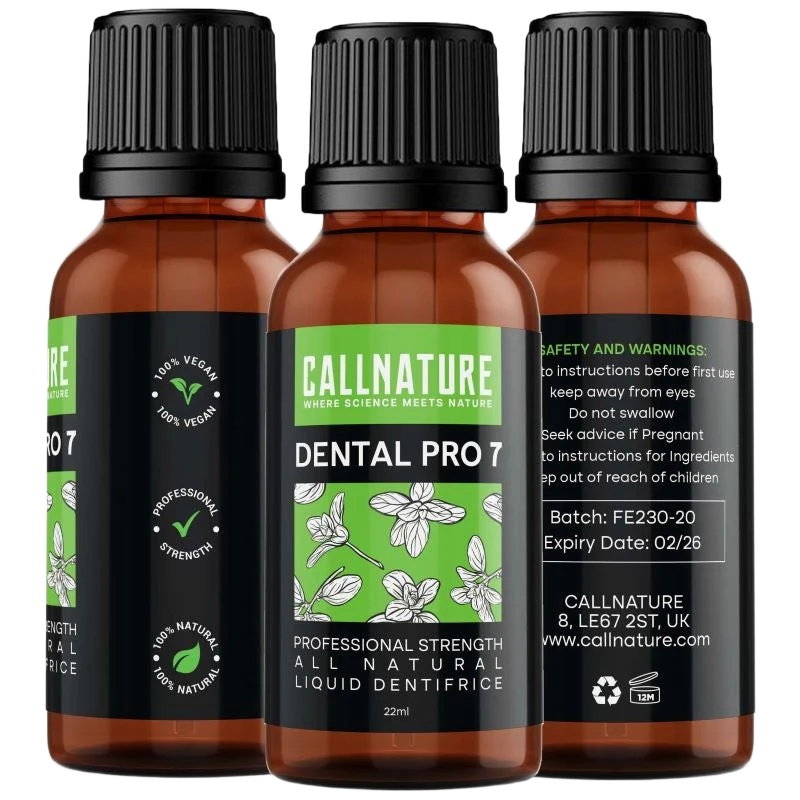
Ready to Try Dental Pro 7?
90-day money-back guarantee. Free shipping on select kits. No questions asked.
Try Dental Pro 7 Risk-FreeRelated Searches
Continue Reading
Disclaimer: Dental Pro 7 is a cosmetic oral-care product. It is not a drug and is not intended to diagnose, treat, cure, or prevent any disease. Statements on this page have not been evaluated by the FDA or MHRA. Always consult a qualified dental professional for oral health concerns. Results may vary. Testimonials reflect individual experiences and are not guaranteed outcomes.