Dental Pro 7 vs Listerine: Gum Health Comparison
Disclosure: I am an independent affiliate for Dental Pro 7. This means I may earn a small commission if you purchase through my links, at no extra cost to you. My review is based on thorough research and an honest analysis of the product's claims and user feedback.
Comparing Dental Pro 7's natural lipid-based approach with Listerine's antiseptic formula. We examine effectiveness, ingredients, and real results for gum disease treatment.
After comparing both products, I found that Listerine has been the dominant name in antiseptic mouthwash for decades. Its distinctive burn and strong taste are practically synonymous with “killing germs” in the public consciousness. But when it comes to treating actual gum disease and improving long-term oral health, is the market leader really your best option?
Dental Pro 7 takes a fundamentally different approach—a concentrated natural serum rather than a rinse, using lipid-based delivery rather than simple surface antisepsis. Let’s examine how these two products compare when it comes to the oral health outcomes that matter most.
Dental Pro 7 is a cosmetic oral-care product. It is not a drug and is not intended to diagnose, treat, cure, or prevent any disease. Statements on this page have not been evaluated by the FDA or MHRA.
Understanding the Fundamental Difference
The most important distinction between these products isn’t their ingredients—it’s how those ingredients reach their target.
Listerine’s Approach
Listerine uses a water-based solution containing essential oils (eucalyptol, menthol, thymol, and methyl salicylate) dissolved in alcohol. When you rinse, these ingredients contact the surfaces of your teeth and gums, killing bacteria on contact.
This approach is effective for reducing surface bacteria and has earned the American Dental Association’s seal for reducing plaque and gingivitis. However, the water-based formula cannot penetrate the lipid barriers of gum tissue, limiting its action to surfaces only.
Dental Pro 7’s Approach
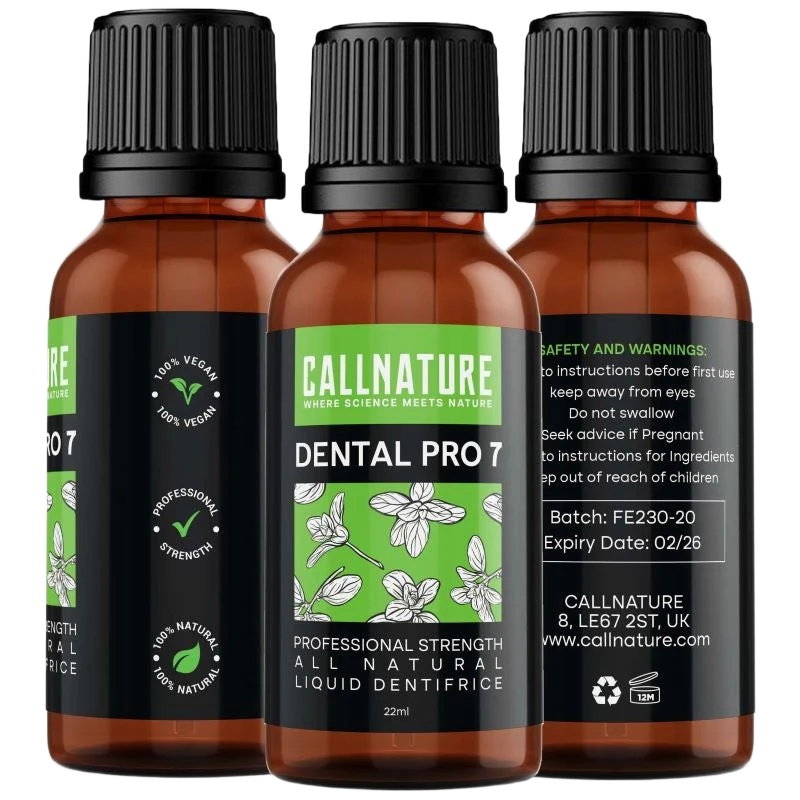
Dental Pro 7 uses a lipid-based carrier system that allows its natural essential oils to penetrate through the mucosal barrier and into gum tissue. Rather than simply rinsing the surface, the active ingredients travel to where harmful bacteria actually live—in periodontal pockets and within the gum tissue itself.
This difference in delivery mechanism is crucial for anyone dealing with more than just surface-level gum irritation.
Ingredient Comparison
Listerine’s Active Ingredients
- Eucalyptol: Antimicrobial derived from eucalyptus oil
- Menthol: Antimicrobial with cooling sensation
- Thymol: Antimicrobial from thyme oil
- Methyl Salicylate: Anti-inflammatory, wintergreen-derived
- Benzoic Acid: Preservative
- Alcohol (21-26%): Solvent and antimicrobial
- Sodium Benzoate: Preservative
- Sucralose: Sweetener
- FD&C Blue 1: Coloring
The essential oils in Listerine are effective antimicrobials, but their delivery in an alcohol-water base limits tissue penetration.
Dental Pro 7’s Active Ingredients
- Tea Tree Oil: Broad-spectrum antimicrobial
- Eucalyptus Oil: Anti-inflammatory and antimicrobial
- Clove Oil: Antiseptic with analgesic properties
- Peppermint Oil: Antimicrobial and freshening
- Myrrh Extract: Supports gum healing
- Thyme Oil: Additional antimicrobial support
- Grapefruit Seed Extract: Natural antimicrobial
Dental Pro 7’s formula contains no alcohol, no artificial colors, no sodium lauryl sulfate, and no synthetic preservatives. The lipid-based system enhances absorption of these ingredients into gum tissue.
Effectiveness for Gum Disease
Clinical Evidence
Listerine has decades of clinical research supporting its ability to reduce plaque and gingivitis. Studies consistently show it reduces visible plaque scores and bleeding on probing compared to placebo.
However, most of these studies measure outcomes related to gingivitis—the early, reversible stage of gum disease. Evidence for Listerine’s effectiveness against established periodontitis (deeper gum disease with bone loss) is more limited.
Dental Pro 7 draws on research supporting lipid-based delivery systems for oral care. Studies on similar essential oil formulations delivered via lipid carriers show:
- Enhanced penetration into gingival tissue
- Greater reduction in deep pocket bacteria
- More significant improvement in clinical attachment levels
- Better long-term maintenance of gum health
Real-World Results
Listerine Users Typically Experience:
- Reduced plaque buildup with consistent use
- Fresher breath
- Mild reduction in early gum inflammation
- Maintenance benefits for generally healthy gums
- Limitations when treating established periodontal disease
Dental Pro 7 Users Typically Experience:
- Reduced bleeding within 2-4 weeks
- Decreased gum inflammation and puffiness
- Firmer, healthier-looking gum tissue
- Long-lasting fresh breath improvement
- Measurable improvement in gum health indicators at dental checkups
The Alcohol Question
Listerine contains 21-26% alcohol, which contributes to its characteristic burn but also causes several concerns:
- Dry Mouth: Alcohol contributes to oral dryness, which can actually promote bacterial growth
- Tissue Irritation: The burning sensation indicates tissue irritation, particularly problematic for people with sensitive gums, canker sores, or recent dental work
- Not Suitable for Everyone: Children, people in recovery, and those with certain medical conditions should avoid alcohol-containing products
Dental Pro 7 is completely alcohol-free, making it suitable for all adults regardless of sensitivity levels or medical history. The absence of alcohol also means it doesn’t contribute to dry mouth, supporting a healthier oral environment.
Daily Use and Tolerance
Listerine Experience
Using Listerine means 60 seconds of significant burning sensation twice daily. While many users become accustomed to this over time, it remains an unpleasant experience for many. Some users reduce their usage frequency because of the discomfort, which diminishes effectiveness.
The strong taste can also linger, affecting food and drink consumption shortly after use. Some users report that the alcohol content makes their mouth feel dry despite the wet rinse.
Dental Pro 7 Experience
Dental Pro 7’s application is quick—a few drops massaged into gums, then a brief rinse. There’s no burning sensation, and the natural essential oils provide a mild, pleasant taste that doesn’t overwhelm.
Because the product is concentrated, you use very little per application. The process takes less time than a 60-second rinse, and there’s no lingering unpleasant taste. Most users find it easy to incorporate into their daily routine.
Cost Comparison
Upfront Price
Listerine is significantly cheaper per bottle, typically costing $5-10 for a large bottle that lasts several weeks. It’s available everywhere—from supermarkets to convenience stores.
Dental Pro 7 costs more upfront but is highly concentrated. A single bottle lasts 2-3 months with regular use.
True Cost Analysis
When calculating actual cost:
- Listerine: Using 20ml twice daily from a 1.5L bottle, one bottle lasts approximately 37 days. At $8 per bottle, that’s roughly $0.22 per day.
- Dental Pro 7: Using 4-6 drops twice daily, a bottle lasts approximately 90 days. At $60 per bottle, that’s roughly $0.67 per day.
Listerine is clearly cheaper. But the question becomes: what are you paying for? If Listerine doesn’t adequately address your gum disease, you may face more expensive dental treatments later. The investment in a more effective product can prevent costs associated with disease progression.
When Listerine Might Be Enough
Listerine can be a reasonable choice for:
- People with healthy gums who want maintenance-level protection
- Those who primarily want fresh breath improvement
- Individuals on a tight budget with minimal gum concerns
- Teenagers and adults who can tolerate the alcohol-based formula
- Situations where convenience and availability matter most
When Dental Pro 7 Is the Better Choice
Dental Pro 7 becomes the stronger option when:
- You have bleeding gums or diagnosed gingivitis
- Your dentist has mentioned early periodontal disease
- You experience persistent bad breath despite good hygiene
- You have sensitive gums that react poorly to alcohol
- You want a natural, chemical-free oral care approach
- You’re looking to avoid potential dental procedures through better preventive care
- You’ve tried rinse-based products without adequate improvement
The ADA Seal Consideration
Listerine carries the American Dental Association (ADA) Seal of Acceptance for reducing plaque and gingivitis. This is a meaningful credential that provides assurance of safety and efficacy for its stated claims.
Dental Pro 7, as a newer product with a different delivery mechanism, may not carry the same established certifications. However, the ADA seal process favors large, established companies with resources to navigate the lengthy approval process. The absence of an ADA seal doesn’t indicate ineffectiveness—it often reflects the realities of the certification process rather than product quality.
Many effective products, particularly those in the natural health space, operate outside the ADA seal framework while still delivering meaningful results supported by user experiences and independent research.
Making Your Decision
The choice between Dental Pro 7 and Listerine ultimately depends on your oral health situation and priorities:
Choose Listerine if: You have healthy gums, want basic maintenance, need an affordable option, or prioritize immediate availability and convenience.
Choose Dental Pro 7 if: You have gum disease symptoms, want the deepest-acting natural treatment available, prefer alcohol-free products, or are willing to invest in preventing disease progression.
For millions of people dealing with the early stages of gum disease—bleeding, inflammation, persistent bad breath—the deeper-acting approach of Dental Pro 7 provides better outcomes than surface-level antisepsis, regardless of how iconic the competing brand might be.
About the Manufacturer: CallNature
Dental Pro 7 is made by CallNature, a UK-based company with over 21 years of experience in natural oral care. They sell exclusively through dentalpro7.com with a 90-day money-back guarantee.
Clinical Guidelines & Health Authorities
Disclaimer: Dental Pro 7 is a cosmetic oral-care product. It is not a drug and is not intended to diagnose, treat, cure, or prevent any disease. Statements on this page have not been evaluated by the FDA or MHRA. Results may vary.
Ready to Try Dental Pro 7?
90-day money-back guarantee. Free shipping on select kits. No questions asked.
Try Dental Pro 7 Risk-FreeRelated Searches
Continue Reading
Disclaimer: Dental Pro 7 is a cosmetic oral-care product. It is not a drug and is not intended to diagnose, treat, cure, or prevent any disease. Statements on this page have not been evaluated by the FDA or MHRA. Always consult a qualified dental professional for oral health concerns. Results may vary. Testimonials reflect individual experiences and are not guaranteed outcomes.